
News of all that's transpired on and off the football field

The Budget touches a few highs and lows as far as personal finance is concerned, and one needs to be aware of them in order to optimise on one's investment plans.

The maximum death toll has been reported from Idukki district, where 43 people have lost their lives so far, as per official estimates. 28 deaths were reported in Malappuram and 27 in Thrissur.

Singh also claimed that the insurgency situation has improved considerably in the last 18 months since the BJP came to power at the Centre and appealed to all militant outfits in Assam to give up arms and come forward for talks.
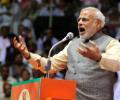
Sops for middle class, poor and farmers on cards.
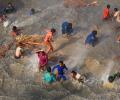
Donald Trump denied it. Hillary Clinton avoided saying it. But the Climate Change crisis is frighteningly real, says Sunita Narain.

Against a turbulent and uncertain background, Budget 2017-18 hewed a steady, forward-looking course, says Shankar Acharya, former chief economic adviser to the government.
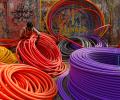
S Naren of ICICI Prudential says long-term investors needn't worry.

Weakness in Infosys, L&T and Hindalco cap index gains.

'The transmission sector is going to be the next sunrise industry.'

Railway Budget has not discriminated against any state.

The government is determined to stop generation of black money, he said.

The government is scheduled to release index of industrial growth for November and consumer price inflation for December later today.

The 30-share Sensex ended down 339 points at 28,119 and the 50-share Nifty closed 100 points lower at 8,438.
Officials say a fall in global oil prices will reduce the government's subsidy burden, giving it a greater chance of hitting its ambitious fiscal deficit target of 4.1 percent of gross domestic product in the fiscal year to March.

IDS-2 and raids to uncover black money stash keep receipts flowing

The government, he said, has implemented 'bold reforms'.

American media has taken a critical view of his accomplishments, saying his flagship 'Make in India' drive is "so far mostly hype."

Here's what the national capital needs to do to ensure the residents stop breathing toxic fumes.

A glance back at some important events that occurred in 2018.
.jpg)
'India is doing better than when we took office 17 months ago'.
Economic growth in the last two years has stayed above seven per cent.

The 30-share Sensex jumped 729 points to end at 28,076 and the 50-share Nifty soared 217 points to end at 8,494.
Sensex falls at close; metals, banks perform well.

Creating many more half-decent jobs for the 10 million plus new entrants to the labour force each year must surely constitute the primary development challenge for India today.

If you are not already lost in the zeros this wealth stands at Rs 257 lakh crore or Rs 257 trillion, according to a report unveiled by Karvy Private Wealth for the year 2014.

'Today, bankers don't want to take risks as the good decisions taken by them were not protected.' 'There is risk involved in all decisions, like businessmen taking risks in their businesses.' 'A banker must have taken a decision when the economic condition was different, and you cannot question him on the basis of the present situation in hindsight.' 'Naturally, this has affected the morale of bankers.'

The GST will alter the very face of fiscal federalism in India.

Amid a grim global scenario, India will have to labour hard to hold on to seven per cent growth in 2016-17.

There are many collateral advantages of taking the tough decision.
Markets extended losses to end 1.5% down on Tuesday, amid weak global cues, after investors turned cautious ahead of key economic data and booked profits in rate sensitive shares while the further fall in the rupee continued to weigh on investor sent.

Friendlier government policies, greater demand and better supply of coal have fuelled investor interest.

Srikanth Kondapalli on what to expect from the seventh BRICS summit meeting to be held in Russia in July.

Prime Minister Narendra Modi didn't hold back on Wednesday when he launched a scathing attack on the Gandhi family and the Congress in Parliament during a debate on the motion of thanks for the president's address.
Investors cheered a sharp decline in the Current Account Deficit, which stands at a 4 year low as exports picked up and gold imports reduced.

Maharashtra Chief Minister Prithviraj Chavan makes a gallant attempt to deflect accusations against the United Progressive Alliance's record in his freewheeling conversation with Business Standard's Aditi Phadnis over lunch.

The 30-share BSE Sensex closed down 162 points at 28,338 and the 50-share Nifty was down 67 points at 8,463.
In the second and final part of this interview, energy and coal industry expert Sunjoy Joshi tells Sheela Bhatt/Rediff.com that we need to take a comprehensive view of the entire energy sector and how piecemeal reform won't take us very far.

One of the urgent tasks ahead for the new government should be to improve public trust in the executive.
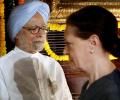
'Good politics is not just staying in power. You cannot sacrifice everything at the altar of trying to ensure the coalition remains in power.'
 © 2026 Rediff.com - Advertise with us - Disclaimer - Privacy Policy - Sitemap - Feedback - About us - Terms of use - Grievances